
Views: 8
Kawasaki Z H2: How Supercharging Changes Performance
カワサキ、過給機付きハイパースポーツ『Z H2 SE』のカラーを変更した2026年モデルを発表 | autosport web
Kawasaki Z H2 | Hypersport Motorcycle | Supercharged Supernaked
Kawasaki Z H2, prueba en profundidad
6
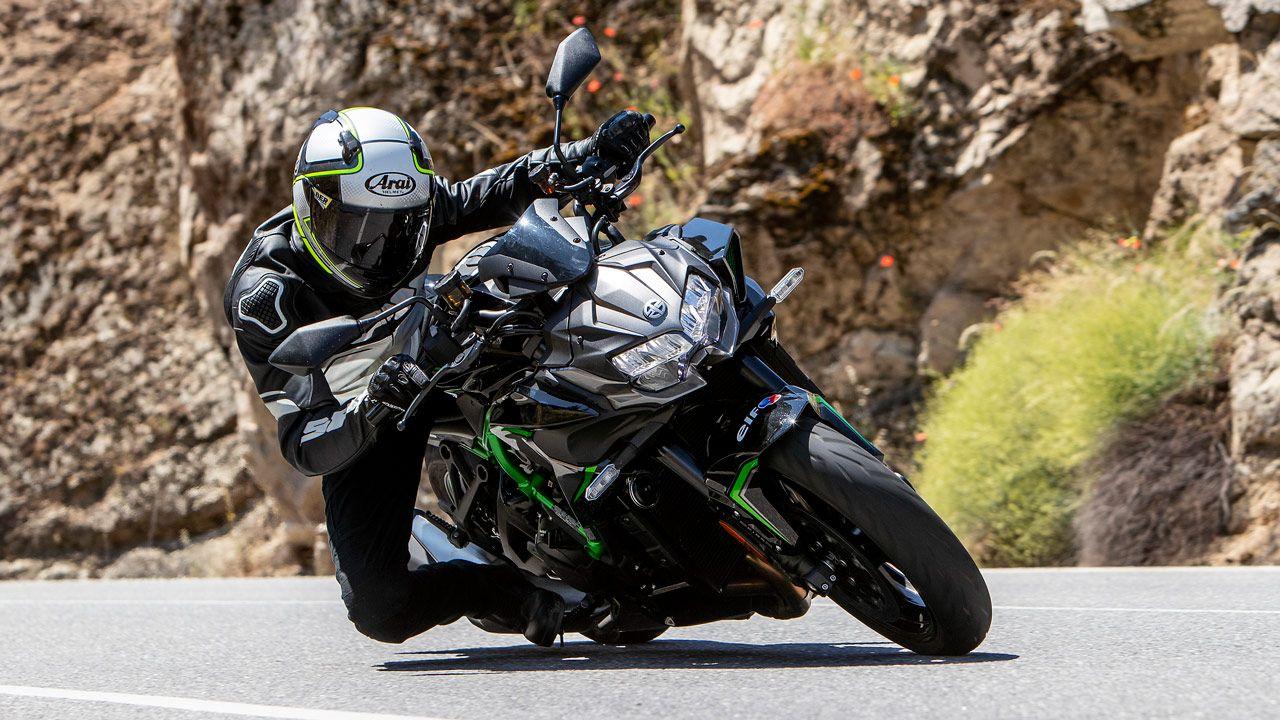
The Kawasaki Z H2 is one of the most distinctive motorcycles in the high-performance naked-bike category. At its heart is a 998cc inline-four engine equipped with a mechanically driven supercharger, producing remarkable acceleration without requiring a larger-displacement engine.
Unlike a conventional naturally aspirated motorcycle, the Z H2 actively compresses incoming air before delivering it to the engine. This changes how the motorcycle produces power, responds to the throttle, and accelerates through its rev range.
Key specifications
998 cc
Engine displacement
200 PS
Maximum power
137 Nm
Maximum torque
239 kg
Curb mass
2026 European-market Z H2 specifications. Peak power at 11,000 rpm; peak torque at 8,500 rpm. Kawasaki+1
1. How the supercharger works
A supercharger is an air compressor mechanically driven by the motorcycle’s engine. Instead of relying solely on atmospheric pressure to fill the cylinders, it forces additional air into the combustion chambers.
Air is compressed before entering the cylinders, while the engine mechanically drives the supercharger.
The process follows four stages:
- Air enters through the motorcycle’s intake duct.
- An engine-driven centrifugal compressor increases its pressure.
- The compressed air enters the cylinders, allowing more fuel to burn.
- The resulting combustion produces greater torque and power.
Kawasaki designed its supercharger specifically for motorcycle use, achieving high efficiency while avoiding the need for a separate intercooler in the Z H2 design. Kawasaki+1
2. How supercharging changes performance
Stronger acceleration
The primary benefit is increased engine output from a compact displacement. More air entering the cylinders allows the engine to generate greater combustion force.
This delivers powerful roll-on acceleration, especially when overtaking or accelerating out of corners.
Immediate throttle response
Unlike an exhaust-driven turbocharger, a mechanical supercharger is directly connected to the engine. It does not need to wait for exhaust flow to accelerate a turbine.
The result is responsive power delivery, although actual response still depends on engine speed, supercharger design, throttle calibration, and electronic controls.
A broad, usable powerband
The Z H2 is tuned for more than maximum horsepower. Kawasaki emphasizes strong low- and mid-range torque, making the engine useful across everyday road speeds as well as high-rpm performance riding. Kawasaki Z H2
3. Supercharged vs naturally aspirated engines
| Characteristic | Z H2 supercharged | Naturally aspirated |
|---|---|---|
| Air induction | Mechanically compressed | Atmospheric pressure |
| Power potential | Higher for similar displacement | Limited by natural airflow |
| Throttle response | Direct boost response | Direct, without boost system |
| Mechanical complexity | Higher | Generally lower |
| Heat generation | Additional compression heat | No compressor heat |
| Efficiency | Depends on operating conditions | Depends on engine design |
Supercharging adds performance but also introduces parasitic power consumption, additional heat, and mechanical complexity. Its benefit comes from the extra engine output exceeding the power required to drive the compressor.
4. Electronics make the power manageable
A 200 PS naked motorcycle requires precise control. Kawasaki combines its engine with multiple electronic rider-assistance systems.
These include Kawasaki Traction Control (KTRC), Cornering Management Function (KCMF), Intelligent ABS (KIBS), selectable power and riding modes, launch control, and a quickshifter.
The systems help manage wheel slip, acceleration, braking, and vehicle stability, but they cannot overcome the limits of tire grip or road conditions. Kawasaki
5. Why the Z H2 is different
Ultimate Authorised Factory Dealer – Ultimate Authorised Factory Dealer
Performance with everyday usability
Unlike the fully faired Kawasaki Ninja H2, the Z H2 adopts upright naked-bike ergonomics, an exposed trellis chassis, and road-oriented engine tuning.
Its 19-liter fuel tank, cruise control, and accessible riding position provide versatility beyond pure track-focused performance.
Conclusion
The Kawasaki Z H2 demonstrates how forced induction can transform a motorcycle’s character. Rather than increasing displacement to generate more power, Kawasaki uses a compact, highly efficient supercharger to deliver exceptional acceleration from a 998cc engine.
The result is a machine that combines superbike-level engine performance with the design and practicality of a hypernaked motorcycle.
Its defining achievement is not simply producing 200 PS, but making that power responsive, flexible, and usable across a wide range of riding conditions.
WordPress SEO package
SEO title
Kawasaki Z H2: How Supercharging Changes Motorcycle Performance
Copy
URL slug
kawasaki-z-h2-supercharged-performance
Copy
Meta description
Discover how the Kawasaki Z H2’s 998cc supercharged engine delivers 200 PS, stronger acceleration, instant response, and outstanding motorcycle performance.
Copy
Category
Motorcycles / Kawasaki / Motorcycle Engineering
Tags
Kawasaki Z H2, Kawasaki, Supercharged Motorcycle, Motorcycle Supercharger, Hypernaked, Forced Induction, 998cc Engine, Motorcycle Performance, Kawasaki Engineering, Z H2 SE, Motorcycle Technology
Copy tags
Primary keyword: Kawasaki Z H2 supercharged performance
Suggested featured image: Kawasaki Z H2 in a three-quarter front view, showing the supercharger intake, aggressive headlights, and green trellis frame.
Official technical reference: Kawasaki Z H2 2026.
Create copy-ready WordPress HTML articleCreate a featured post thumbnailCreate a one-page motorcycle infographic