


Views: 8
BMW R 1300 GS: Adventure Motorcycle Engineering
MOTORCYCLES • ADVENTURE TOURING • BMW ENGINEERING


12
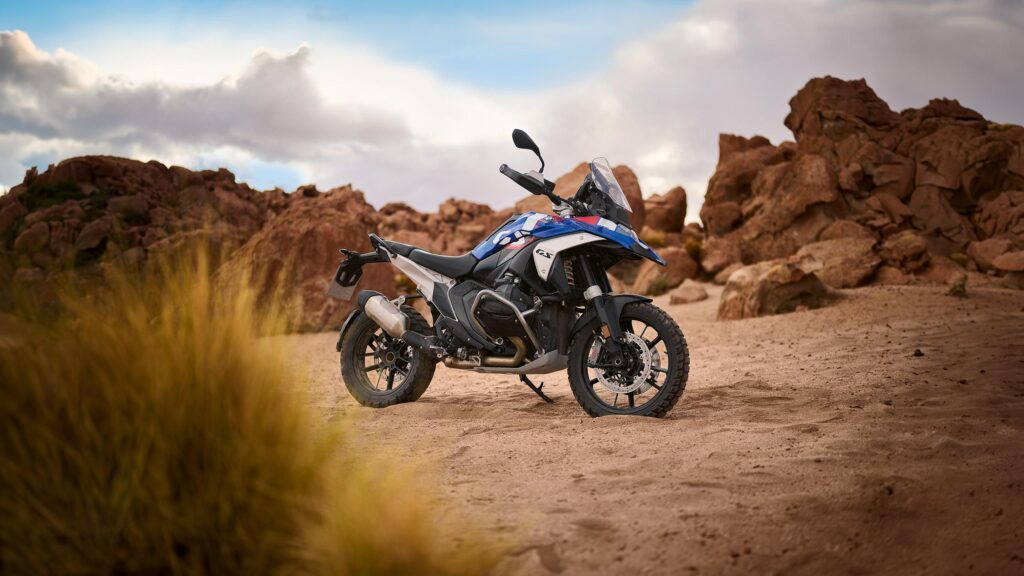
The BMW R 1300 GS represents a major evolution in adventure motorcycle engineering. Introduced in September 2023 for the 2024 model year, it combines BMW’s legendary boxer-twin engine with an extensively redesigned chassis, advanced suspension, electronic rider assistance, and long-distance touring capability.
Its engineering philosophy is straightforward: deliver powerful performance, precise handling, and versatility without making a large adventure motorcycle unnecessarily heavy or complicated.
BMW redesigned much of the motorcycle rather than merely increasing the engine capacity of the preceding R 1250 GS.
BMW Group Newsroom
+1
BMW R 1300 GS: Technical specifications
1,300 cc
Engine displacement
145 hp
Maximum power
149 Nm
Peak torque
| Specification | BMW R 1300 GS |
|---|---|
| Engine | Air/liquid-cooled boxer twin |
| Displacement | 1,300 cc |
| Maximum power | 145 hp at 7,750 rpm |
| Maximum torque | 149 Nm at 6,500 rpm |
| Valve technology | BMW ShiftCam |
| Transmission | 6-speed |
| Final drive | Shaft drive |
| Front suspension | EVO Telelever |
| Rear suspension | EVO Paralever |
| Front/rear wheels | 19-inch / 17-inch |
| Fuel capacity | 19 litres |
| Ready-to-ride weight | Approximately 237 kg |
| Standard seat height | 850 mm |
| Fuel consumption | 4.8 L/100 km (WMTC) |
BMW manufacturer specifications. Details and equipment can vary by market and model configuration.
BMW Motorrad
+2
1. Boxer engine: The heart of the R 1300 GS


At the centre of the motorcycle is BMW’s 1,300 cc horizontally opposed two-cylinder engine.
Unlike inline or V-twin arrangements, the boxer design positions the cylinders on opposite sides of the crankshaft.
This layout offers important engineering advantages:
- A relatively low engine mass distribution, supporting balanced handling.
- A distinctive and characterful power delivery.
- Cylinder heads positioned in the airflow.
- Good mechanical balance through opposing piston movement.
The engine produces 145 horsepower and 149 Nm of torque, making it significantly more powerful than the preceding R 1250 GS.
BMW ShiftCam technology
ShiftCam varies intake-valve timing and lift to optimize engine performance across different operating conditions.
At lower engine speeds, the system helps provide smooth and usable torque. At higher engine speeds, it supports stronger cylinder filling and power delivery.
BMW also placed the gearbox beneath the engine, contributing to a shorter, more compact drivetrain package.
BMW Group Newsroom
2. Chassis engineering: Stronger and more compact


One of the most significant changes is the motorcycle’s redesigned frame.
BMW replaced the earlier tubular main-frame arrangement with a steel sheet-metal shell structure. The rear section uses die-cast aluminium.
This architecture is engineered to improve structural rigidity, packaging efficiency and steering precision.
The redesigned engine and frame help reduce overall mass. BMW reported a weight reduction of approximately 12 kg compared with the preceding model at launch.
BMW Group Newsroom
3. EVO Telelever and EVO Paralever suspension


8
Traditional telescopic forks perform both wheel guidance and suspension duties. BMW’s Telelever front suspension separates several of these functions through its linkage and central shock absorber design.
The EVO Telelever system aims to provide stable steering geometry and reduce excessive front-end dive during braking, while preserving useful feedback and suspension compliance.
At the rear, EVO Paralever combines a single-sided swingarm with shaft-drive engineering designed to limit undesirable suspension reactions from drivetrain torque.
Optional Dynamic Suspension Adjustment (DSA) electronically adapts damping and spring characteristics to riding conditions and load.
BMW Motorrad
+1
4. Electronic technology and rider assistance
Modern adventure motorcycles need to perform across changing weather, surfaces and riding conditions.
The R 1300 GS uses an integrated electronics package to support this versatility.
Standard equipment on BMW’s listed specifications includes Dynamic Traction Control, Full Integral ABS Pro, engine drag torque control, hill-start assistance and four riding modes: Eco, Rain, Road and Enduro.
Depending on market and configuration, optional equipment includes adaptive vehicle height control, Active Cruise Control and advanced electronic suspension.
These technologies assist the rider but do not eliminate the need to adjust speed and technique to available traction.
BMW Motorrad
5. Touring comfort and off-road performance


The BMW R 1300 GS is engineered for two different operating environments.
On paved roads, the upright ergonomics, substantial torque, wind protection and suspension architecture support long-distance touring.
On unpaved roads, its standing-rider ergonomics, Enduro riding mode, suspension travel and available off-road wheel options help it negotiate gravel tracks and uneven terrain.
Nevertheless, its 237 kg ready-to-ride mass remains a significant consideration on technical trails, particularly in sand, mud and very slow manoeuvres.
6. Shaft-drive engineering
Instead of a conventional exposed chain, the R 1300 GS transfers power to its rear wheel through a shaft-drive system.
Advantages include reduced routine chain-maintenance requirements and cleanliness during long-distance travel.
Trade-offs include mechanical complexity and potentially more expensive repairs. A shaft drive still requires inspection and servicing according to BMW’s maintenance schedule.
7. Engineering assessment
The BMW R 1300 GS is particularly impressive for the way its major systems work together.
The compact boxer engine supplies substantial torque. The redesigned frame supports precise handling. Telelever and Paralever suspension distinguish its ride characteristics from conventional adventure motorcycles, while advanced electronics broaden its operating range.
Its greatest strength is not any single specification, but its ability to combine highway touring, daily riding and adventure travel in one machine.
Conclusion
The BMW R 1300 GS demonstrates how established motorcycle engineering can evolve through mechanical redesign, electronic integration and careful weight management.
It remains a technologically sophisticated adventure motorcycle designed for riders who demand performance, comfort, versatility and distinctive boxer-engine character.
The R 1300 GS is more than a larger-capacity GS: it is a comprehensive reengineering of BMW’s flagship adventure platform.
SEO details for WordPress
SEO title
BMW R 1300 GS: Engine, Suspension & Adventure Engineering
Meta description
Explore BMW R 1300 GS engineering, including its 145 hp boxer engine, ShiftCam technology, EVO Telelever suspension, chassis and adventure features.
URL slug
bmw-r-1300-gs-adventure-motorcycle-engineering
Focus keyphrase
BMW R 1300 GS engineering
WordPress tags Copy tags
BMW R 1300 GS, BMW Motorrad, Adventure Motorcycles, BMW GS, Boxer Engine, Motorcycle Engineering, BMW ShiftCam, EVO Telelever, EVO Paralever, Adventure Touring, Motorcycle Technology, Off-Road Motorcycles, Shaft Drive
Official sources
Suggested category: Motorcycles / BMW / Adventure Motorcycles. Suggested featured image: a BMW R 1300 GS photographed in a mountain or desert landscape, with official or properly licensed imagery.