


Views: 0
Harley-Davidson Fat Boy: An American Icon


7
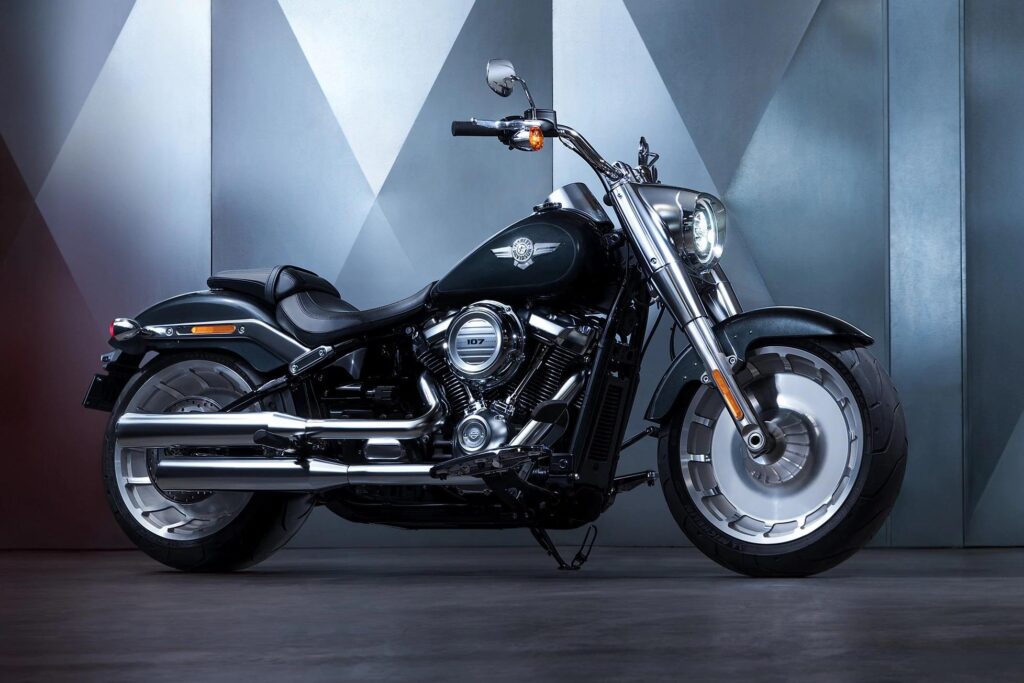
Few motorcycles have achieved the legendary status of the Harley-Davidson Fat Boy. With its muscular stance, distinctive solid-disc-style wheels, powerful V-twin engine, and unmistakable American character, the Fat Boy has become one of the most recognizable cruiser motorcycles ever produced.
Introduced in 1990, the Fat Boy represents Harley-Davidson’s combination of classic styling, mechanical presence, and relaxed highway cruising.
1. The Birth of an American Legend
The Fat Boy debuted as a 1990 model, developed by Harley-Davidson designers Willie G. Davidson and Louie Netz.
Its original design featured a silver finish, broad front fork, wide tires, and nearly solid wheels that created an imposing appearance.
The motorcycle was based on Harley-Davidson’s Softail platform, combining the appearance of a traditional hardtail frame with hidden rear suspension.
2. An Unmistakable Design


9
Several features distinguish the Fat Boy from other cruisers:
- Solid-disc-style wheels: A defining visual signature since its introduction.
- Wide tires: Give the motorcycle its substantial road presence.
- Low seating position: Creates a relaxed, feet-forward riding posture.
- Large V-twin engine: Provides strong low-speed torque and characteristic Harley-Davidson sound.
- Minimalist styling: Combines substantial metal surfaces with clean, classic proportions.
The Fat Boy emphasizes visual identity and effortless cruising rather than lightweight agility or maximum top speed.
3. Engine Evolution
Over more than three decades, the Fat Boy has evolved through several Harley-Davidson engine generations.
| Era | Engine | Character |
|---|---|---|
| 1990s | Evolution 1,340 cc | Classic air-cooled V-twin |
| 2000s | Twin Cam engines | Greater displacement and torque |
| 2018 onward | Milwaukee-Eight | Refined performance and improved ride quality |
| 2025 model | Milwaukee-Eight 117 Custom, 1,923 cc | Stronger modern cruiser performance |
Engine specifications vary by model year and market.
4. The Fat Boy in Hollywood


The Fat Boy gained worldwide recognition through the 1991 film Terminator 2: Judgment Day.
Its appearance in the film’s famous motorcycle chase helped transform it from an already distinctive American cruiser into an internationally recognized cultural icon.
5. What Makes the Fat Boy Special?
Unlike sport motorcycles designed primarily for acceleration, cornering, and track performance, the Fat Boy delivers a different experience.
Its strengths include relaxed highway riding, substantial engine torque, a low seat, distinctive styling, and a strong connection to American motorcycle culture.
However, its considerable weight, wide tires, and cruiser geometry make it less agile than lighter motorcycles, particularly in tight urban conditions.
6. Classic vs Modern Fat Boy


1990 Fat Boy
Evolution engine, original Softail design, classic silver finish.


Modern Fat Boy
Milwaukee-Eight power, updated chassis, modern lighting and electronics.
7. Why It Remains an Icon
The Fat Boy has survived changing motorcycle trends because its identity is immediately recognizable. Its design has evolved without abandoning the visual elements that made the original famous.
It also represents an important part of Harley-Davidson’s heritage: motorcycles designed as much for emotional appeal, craftsmanship, and individual expression as for transportation.
Conclusion
The Harley-Davidson Fat Boy is more than a heavyweight cruiser. It is a symbol of American motorcycle design, combining unmistakable styling, V-twin character, and decades of cultural influence.
From its 1990 debut to its modern Milwaukee-Eight-powered versions, the Fat Boy continues to demonstrate why some motorcycle designs become timeless.
SEO information
- SEO title: Harley-Davidson Fat Boy: History, Design & American Cruiser Legacy
- Meta description: Explore the Harley-Davidson Fat Boy’s history, iconic design, V-twin engines, Hollywood fame, and evolution into a legendary American cruiser.
- Focus keyword: Harley-Davidson Fat Boy
- Suggested URL slug:
harley-davidson-fat-boy-american-icon - Category: Motorcycles / Harley-Davidson / Cruiser Motorcycles
Suggested official reference: Harley-Davidson Official Website