


Views: 1
Suzuki Katana: The Evolution of an Iconic Motorcycle Design
Few motorcycles have left such a distinctive mark on motorcycle design as the Suzuki Katana. First introduced in 1981, this remarkable machine combined radical styling, powerful Japanese engineering, and a design philosophy inspired by the traditional Japanese sword.

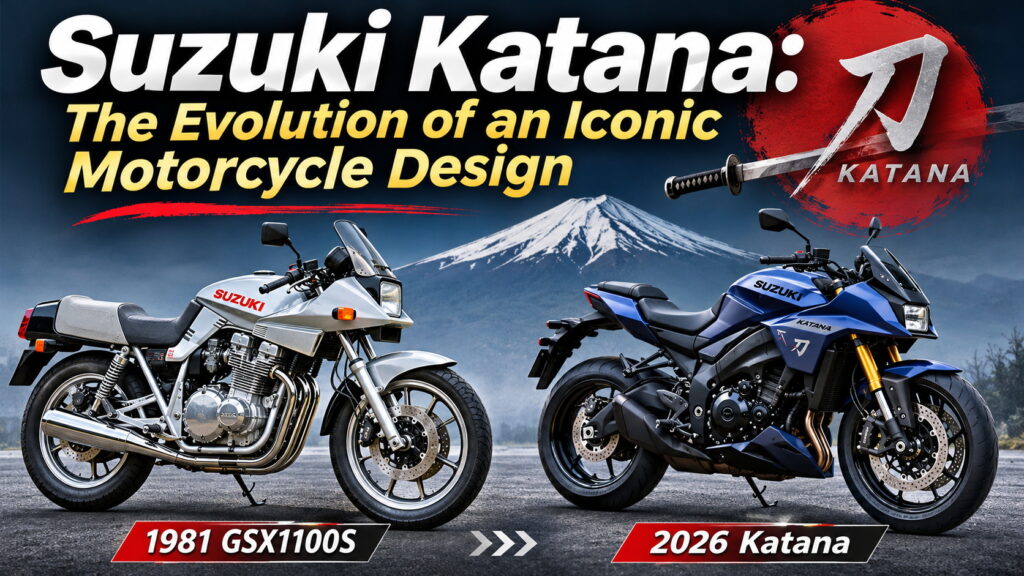
Over four decades later, the Katana remains one of Suzuki’s most recognizable motorcycles. Its transformation from the original air-cooled GSX1100S to a modern 999cc performance machine illustrates how iconic styling can evolve without losing its identity.
1. The Birth of the Suzuki Katana: 1980–1981
The Suzuki Katana began as an ambitious effort to redefine the appearance of Japanese performance motorcycles. Suzuki collaborated with Germany’s Target Design studio, whose design team created a radically angular motorcycle unlike the rounded machines commonly seen during the late 1970s.
The design was unveiled at the 1980 Cologne Motorcycle Show and attracted enormous attention. In 1981, the production GSX1100S Katana reached international markets.


The original Katana introduced a revolutionary visual language, with a sharply sculpted front fairing, rectangular headlight, elongated fuel tank, low handlebars, and a distinctive stepped seat.
Its most remarkable achievement was creating a strong visual connection between motorcycle design and the sharp, precise appearance of a Japanese sword.
2. Original GSX1100S: Performance Meets Radical Styling
The original GSX1100S was not merely an experimental design. It was a powerful superbike built around Suzuki’s established four-cylinder engineering.
| Specification | 1981 Suzuki GSX1100S |
|---|---|
| Engine | 1,074cc inline-four |
| Cooling | Air-cooled |
| Valve train | DOHC, 16 valves |
| Transmission | 5-speed manual |
| Frame | Tubular steel |
| Design debut | 1980 Cologne Show |
| Production launch | 1981 |
The large-displacement engine provided powerful acceleration and impressive high-speed performance. Combined with the Katana’s unconventional appearance, this made the motorcycle one of the most distinctive superbikes of its generation.
3. The Katana Family Expands: 1982–2000
Following the GSX1100S, Suzuki expanded the Katana identity to other engine capacities and markets.
Suzuki GSX750S Katana
The GSX750S brought the distinctive Katana styling to the 750cc class in 1982. Its angular bodywork and recognizable silhouette helped make the design accessible to a wider audience.
Smaller Katana Models
Suzuki subsequently introduced several smaller-displacement machines carrying Katana styling or branding, including 400cc and 250cc models.
Katana Sport-Touring Models
In markets such as North America, the Katana name later became associated with Suzuki’s GSX-F sport-touring family. These motorcycles emphasized practical road performance, aerodynamic fairings, and everyday riding usability.
Meanwhile, the original GSX1100S continued in various forms until 2000, strengthening its reputation as a modern classic.
4. The Return of the Katana: 2019
Suzuki revived the Katana with a new-generation motorcycle unveiled in 2018 and launched in 2019.
Rather than creating a direct reproduction of the original, Suzuki combined historical styling elements with contemporary street-bike engineering.
The modern Katana retained the angular front design, short tail, sculpted bodywork, and strong visual personality of the 1981 motorcycle.
Underneath, however, the new machine featured a liquid-cooled inline-four engine derived from Suzuki’s GSX-R family, an aluminum frame, inverted front suspension, fuel injection, and electronic rider assistance.
This transformation established the Katana as a modern retro-inspired performance motorcycle rather than simply a nostalgic collector’s model.
5. The 2022 Suzuki Katana: A Technological Evolution
The 2022 model brought important improvements to the Katana’s engine response, electronics, and everyday usability.
Its updated 999cc liquid-cooled inline-four engine produced 152 PS, while Suzuki introduced a more advanced electronic control package.
Key Improvements
- Updated 999cc inline-four engine.
- 152 PS maximum power output.
- Electronic ride-by-wire throttle control.
- Three selectable engine-response modes.
- Five-mode traction control system, plus off.
- Bidirectional quick-shift system.
- Assist and slipper clutch.
- Updated LCD instrument display.
- Refined emissions and engine management.
Together, these improvements made the Katana more refined while preserving its aggressive inline-four personality.
6. The 2026 Suzuki Katana
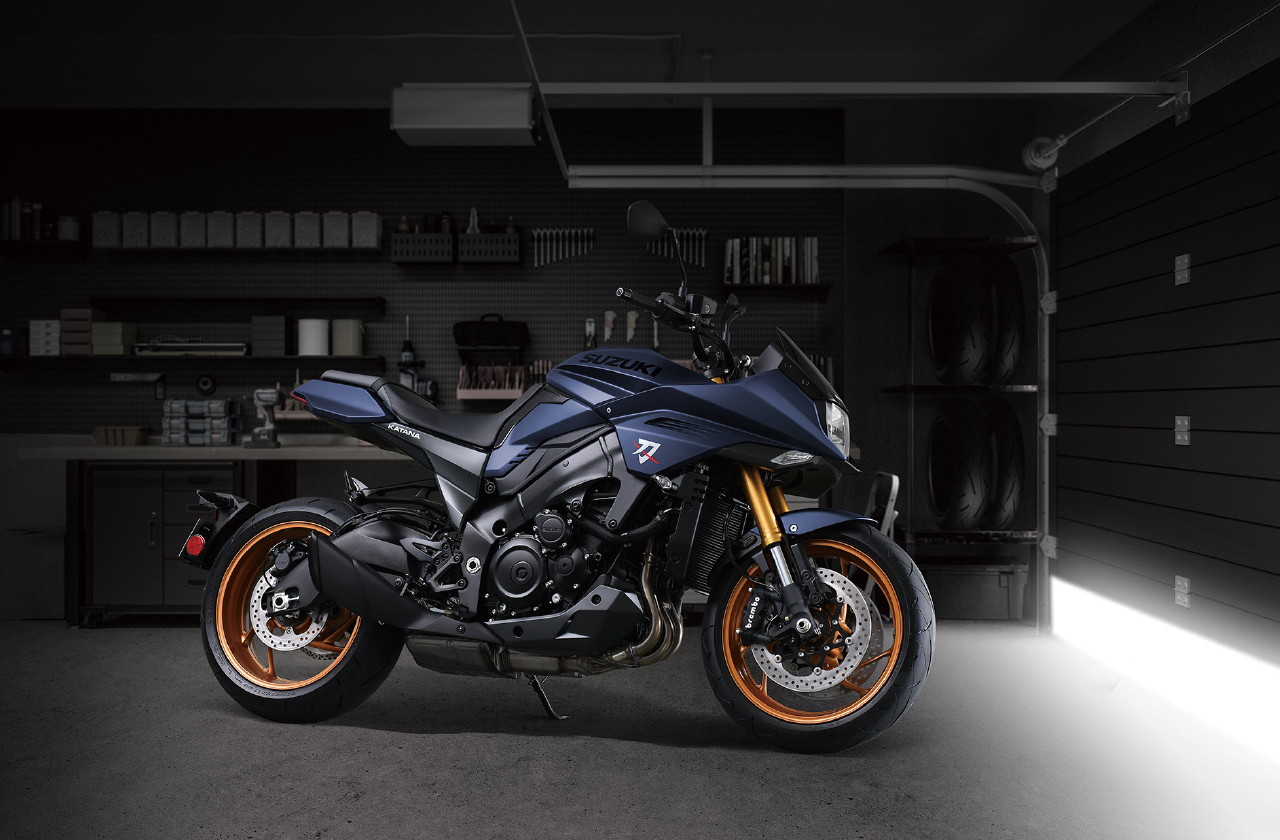
The 2026 Suzuki Katana continues the contemporary interpretation of the original design, combining angular Japanese styling with modern performance technology.
Its sharp front fairing, vertically stacked LED headlight, exposed mechanical components, and abbreviated rear bodywork help preserve the model’s instantly recognizable identity.
| Specification | 2026 Suzuki Katana |
|---|---|
| Engine | 999cc inline-four |
| Cooling | Liquid-cooled |
| Maximum Power | 152 PS / 112 kW |
| Transmission | 6-speed |
| Frame | Aluminum |
| Curb Weight | 215 kg |
| Seat Height | 825 mm |
| Fuel Capacity | 12 litres |
| Front Brakes | Dual 310mm discs |
| Rider Electronics | ABS, traction control, riding modes, quickshifter |
Specifications and equipment may vary depending on regional market requirements.
7. Original vs Modern Katana: Design Comparison


| Feature | 1981 Katana | Modern Katana |
|---|---|---|
| Engine | 1,074cc | 999cc |
| Cooling | Air-cooled | Liquid-cooled |
| Transmission | 5-speed | 6-speed |
| Chassis | Steel frame | Aluminum frame |
| Lighting | Conventional | LED |
| Dashboard | Analog instruments | Digital LCD |
| Electronic Aids | Minimal | Advanced rider assistance |
8. Why the Suzuki Katana Became Iconic
Revolutionary Motorcycle Styling
The original Katana broke away from conventional rounded motorcycle design, introducing sharply defined surfaces and dramatic proportions.
Japanese Engineering Identity
The Katana combined the mechanical performance of Suzuki’s four-cylinder engines with a design inspired by Japanese craftsmanship.
Recognition Across Generations
The continued popularity of the Katana demonstrates how a distinctive design can remain influential across decades of technological change.
In 2022, Japan’s Automotive Hall of Fame recognized the GSX1100S and GSX750S Katana as historic vehicles.
9. Advantages and Limitations of the Modern Katana
Advantages
- Distinctive and recognizable styling.
- Powerful four-cylinder engine performance.
- Modern electronic rider assistance.
- Responsive road handling.
- Strong connection to Suzuki’s heritage.
Limitations
- Relatively small 12-litre fuel tank.
- Limited wind protection for extended highway journeys.
- Limited luggage and passenger practicality.
- High-performance engine may not suit beginners.
- More specialized than conventional sport-touring motorcycles.
10. Suzuki Katana Evolution Timeline
- 1980: Original Katana design unveiled at Cologne.
- 1981: GSX1100S enters production.
- 1982: GSX750S and other Katana models expand the range.
- 1990s: Katana name continues on various sport and sport-touring motorcycles.
- 2000: Final year of original GSX1100S production.
- 2018: New-generation Katana officially unveiled.
- 2019: Modern Katana introduced to the market.
- 2022: Engine and electronic systems updated.
- 2026: Katana continues as a modern heritage-inspired performance motorcycle.
11. Final Verdict: A Design That Stands the Test of Time
The Suzuki Katana is one of the most distinctive motorcycles ever developed by the Japanese manufacturer.
Its original design challenged motorcycle conventions, while its modern interpretation demonstrates that powerful design ideas can remain relevant across generations.
From the air-cooled GSX1100S of 1981 to the technologically advanced 999cc Katana of today, the model has continued to represent originality, Japanese engineering, and unmistakable road presence.