
Views: 2
The 1994 Ducati 916 brought together a compact racing chassis, a liquid-cooled twin-cylinder engine and one of motorcycling’s most recognisable silhouettes. Massimo Tamburini’s design is memorable from almost any angle: a low nose, narrow waist, exposed rear wheel and two silencers tucked beneath the seat. Yet its importance extends beyond styling. The 916 linked Ducati’s road motorcycles to a successful Superbike programme and influenced the generations that followed.
This guide covers the original 916 and explains the later family variants pictured below. Explore its specifications, development story and road-test context, then browse ten photographs and three videos.
When did the Ducati 916 arrive?
Ducati’s heritage archive records a public unveiling at the Milan Motorcycle Show in October 1993. The manufacturer celebrates 1994 as the landmark year in the motorcycle’s history. Those dates describe different milestones: the show debut came before the model’s first full season in the public eye. Ducati’s original 916 history is the starting point for this chronology.
Market dates can differ too. In its July 1994 test, Cycle World described the American version as an early-release 1995 model. A registration year or an advertisement’s model-year label therefore needs to be read alongside the motorcycle’s market and identification records.
1994 Ducati 916 specifications
| Engine capacity | 916 cc |
|---|---|
| Layout | Liquid-cooled 90-degree twin, four valves per cylinder |
| Maximum power | 114 CV at 9,000 rpm, as listed by Ducati’s Italian archive |
| Quoted maximum speed | 260 km/h |
| Dry weight | 195 kg |
| Transmission | Six-speed gearbox, dry clutch, chain final drive |
These historical reference figures are not measurements of every surviving example. Dry weight excludes operating loads, while a rear-wheel dynamometer reading differs from an engine output claim. SP, SPS, racing and market-specific versions must be identified separately. Ducati’s Italian heritage specification retains the original CV unit.
The engine: development rather than a clean break
The 916 followed the 851 and 888 in Ducati’s four-valve superbike development. Its 94 mm bore and 66 mm stroke gave the larger displacement, while fuel injection and the six-speed transmission carried that technical lineage forward. In its contemporary test, Cycle World measured 105 horsepower at the rear wheel. That result belongs to its test motorcycle and conditions; it should not replace Ducati’s differently defined archive figure.
The same report described a revised airbox formed partly by the underside of the fuel tank. This is a useful example of the design’s integrated thinking: components did more than one job, helping packaging as well as performance. The motorcycle’s appeal was not simply a larger engine wearing a new fairing.
Tamburini’s design: five details to notice
Ducati recounts how Tamburini used traces left by rainwater on prototype bodywork to study airflow. The story connects the motorcycle’s appearance with practical development rather than treating beauty as an afterthought.
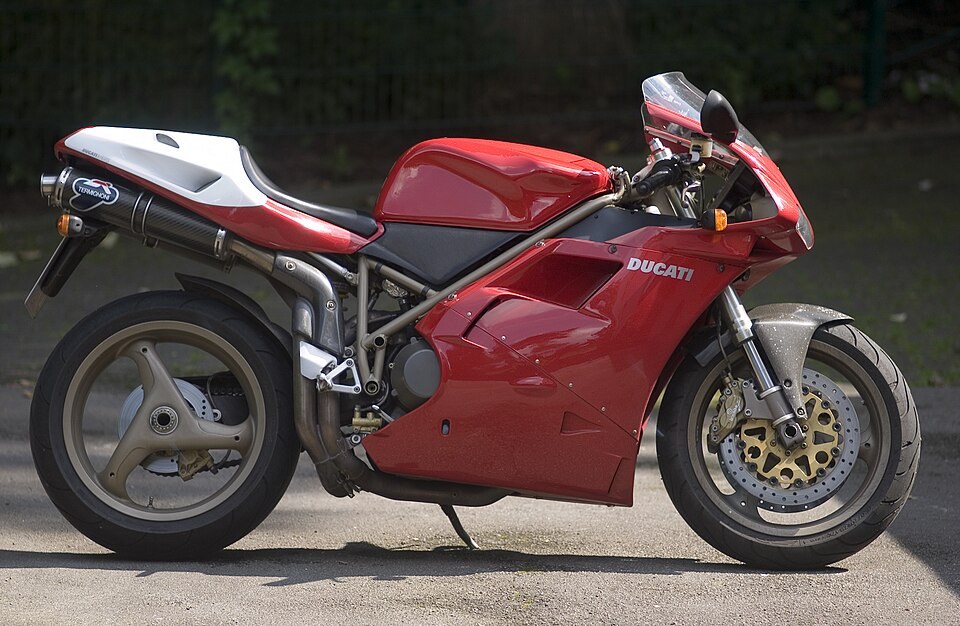
- Low twin-headlamp nose: gives the front a compact, focused expression.
- Sculpted fuel tank: draws the rider into the narrow centre of the motorcycle.
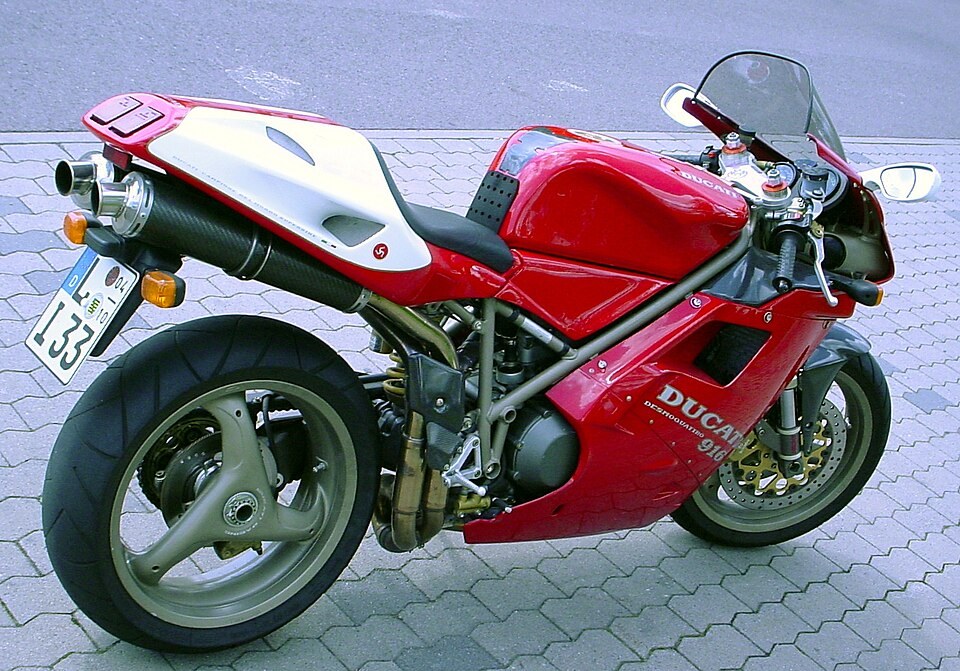
- Underseat exhausts: leave the sides visually clean and make the tail distinctive.
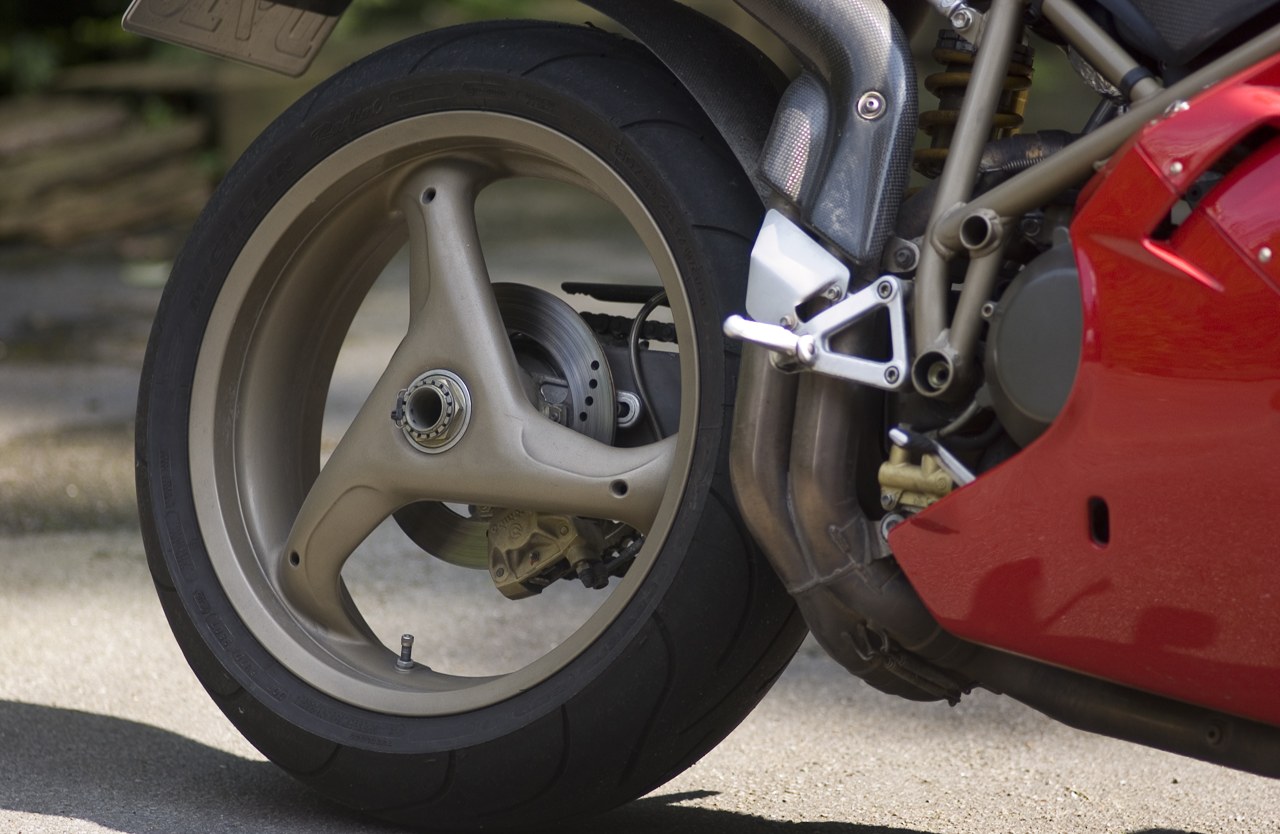
- Single-sided swingarm: exposes the rear wheel and contributes to the recognisable profile.
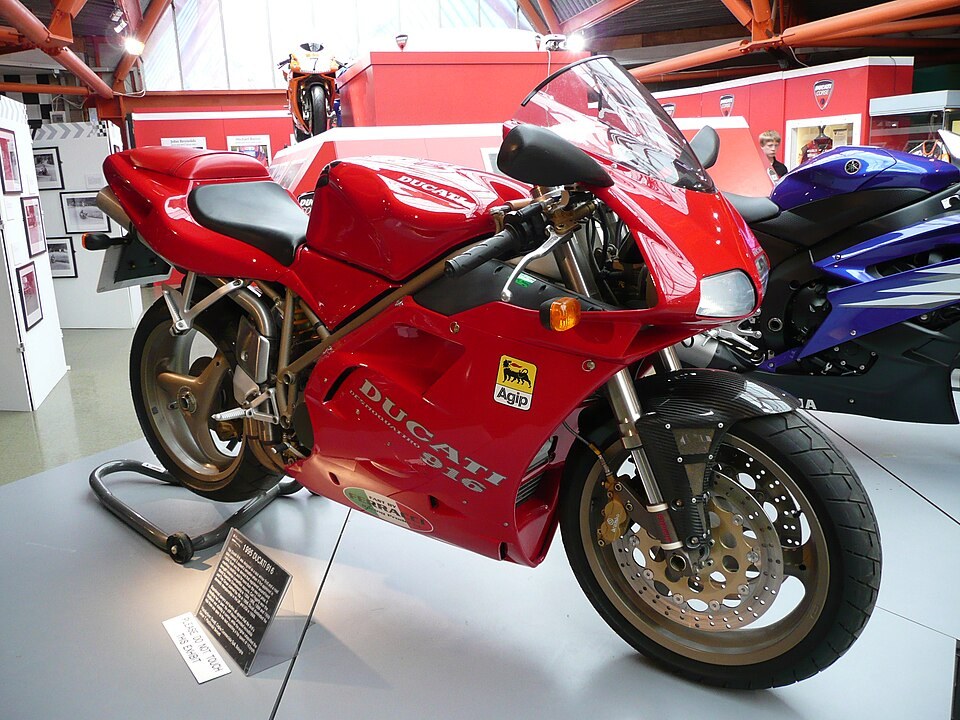
- Visible trellis structure: makes the chassis part of the design when the bodywork is removed.
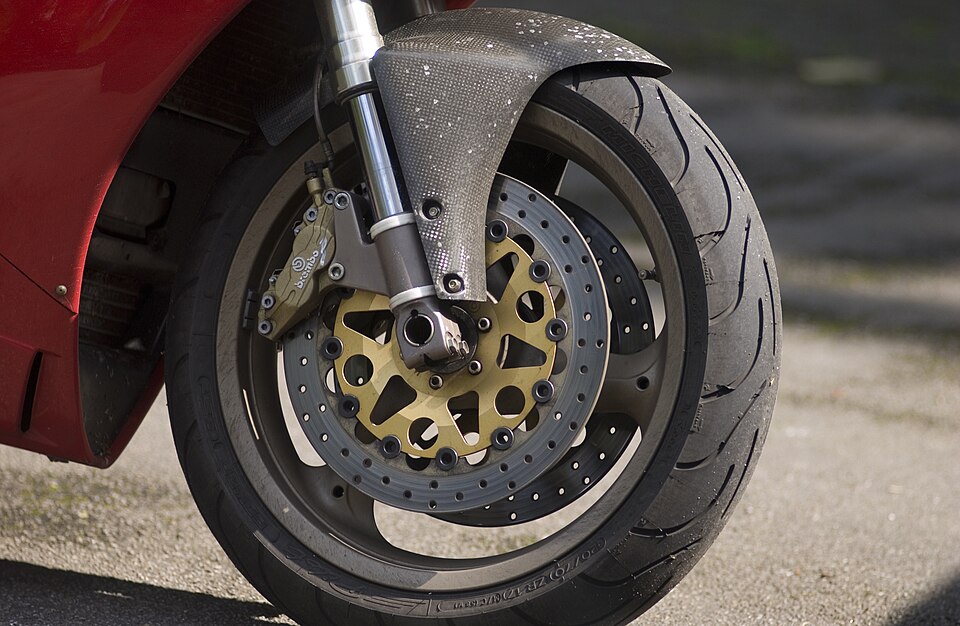
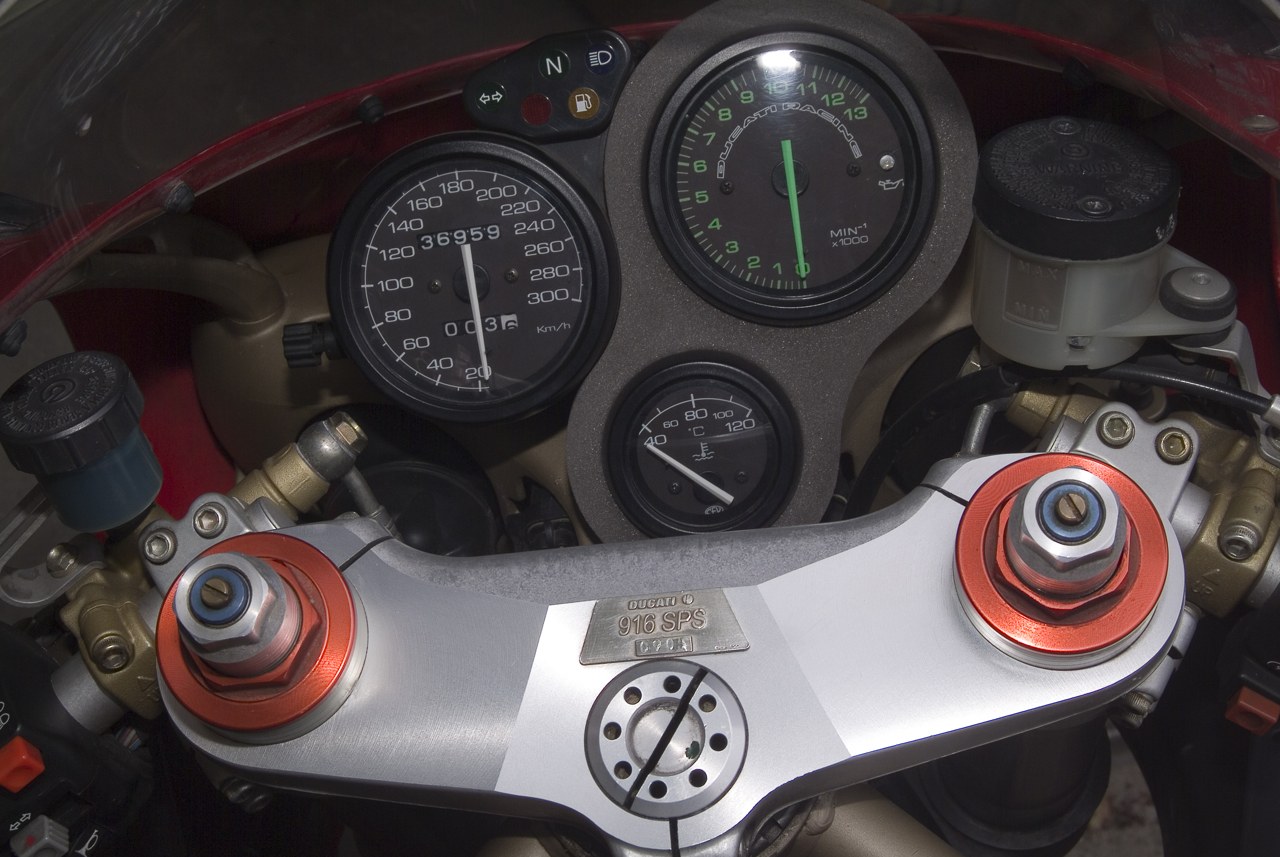
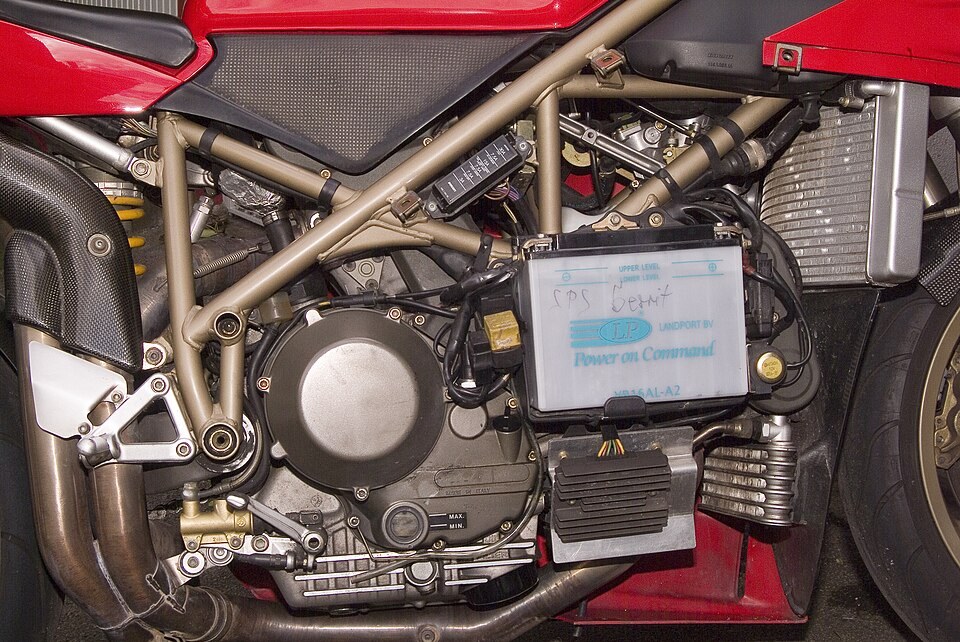
The gallery includes close-ups of the instruments, engine and wheels so these features can be examined rather than merely listed.
Chassis, riding position and road-test context
The 916 used a steel-tube trellis chassis, an aluminium rear subframe and adjustable suspension. Clement Salvadori’s Rider retrospective describes the compact, track-focused road motorcycle and its single-sided rear suspension arrangement. Its account also highlights the dry clutch, fuel injection and six-speed transmission.
That sporting purpose brings a compromise. Salvadori found extended rides demanding on the rider’s back, shoulders and hands. Readers should distinguish that published experience from a first-hand test by this website. A visually immaculate machine can still be an intense road companion; comfort depends on the rider, route and setup.
Racing legacy and the later 916 family
The 916’s racing story helped turn an arresting road bike into a lasting Ducati symbol. Rider records four Superbike championship-winning seasons during its five-year production period. However, the road model, homologation specials and factory race machines are different specifications.
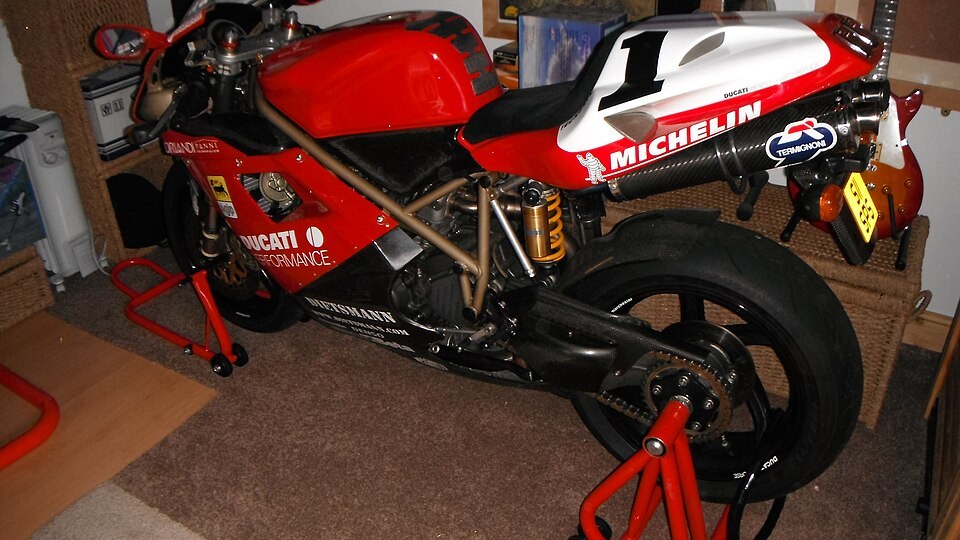
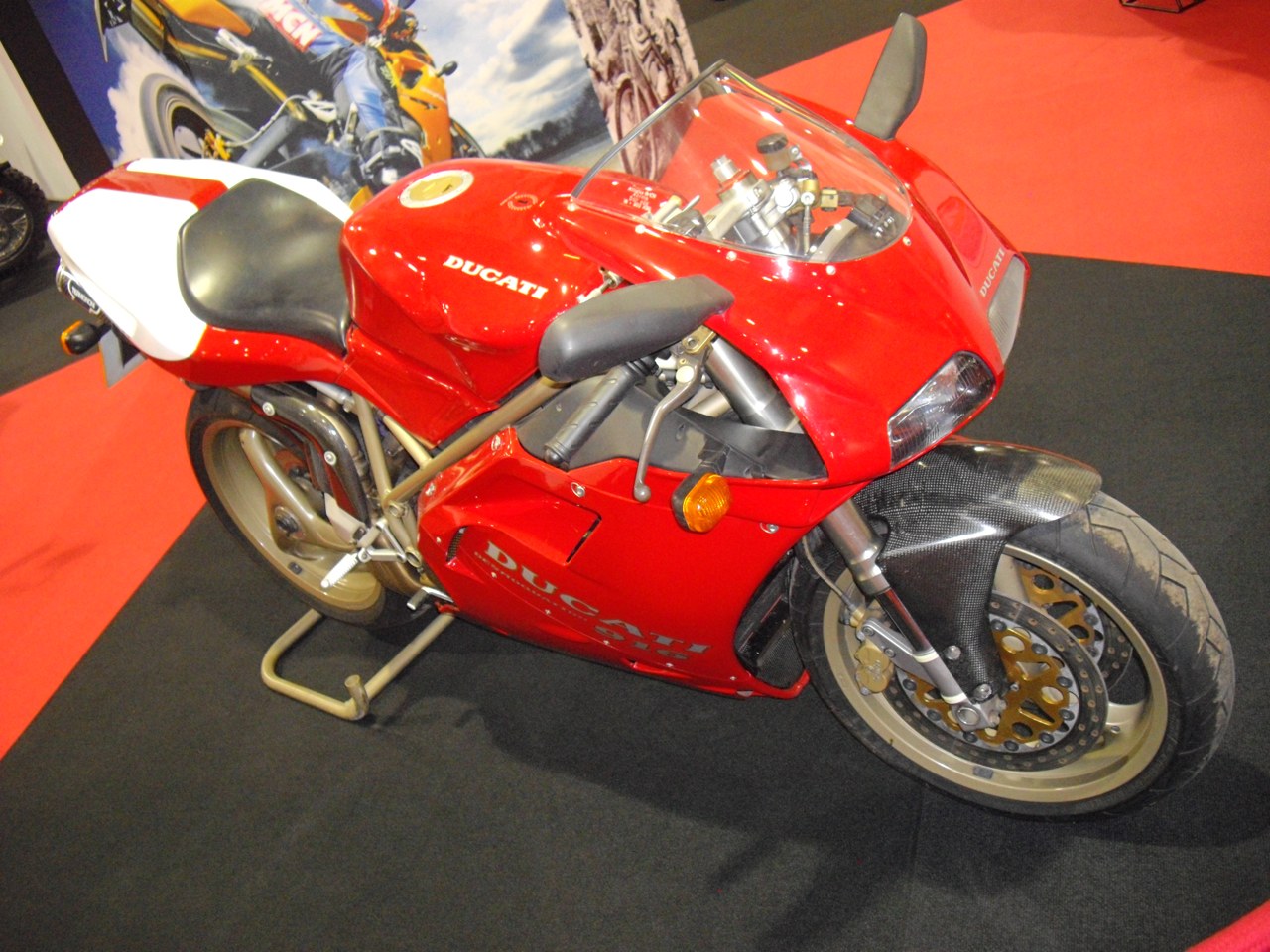
The family also evolved through later versions. Several gallery photographs show 1998 SPS machinery and a Foggy Replica; they illustrate the family’s development and are labelled accordingly. They are not presented as untouched 1994 standard motorcycles.
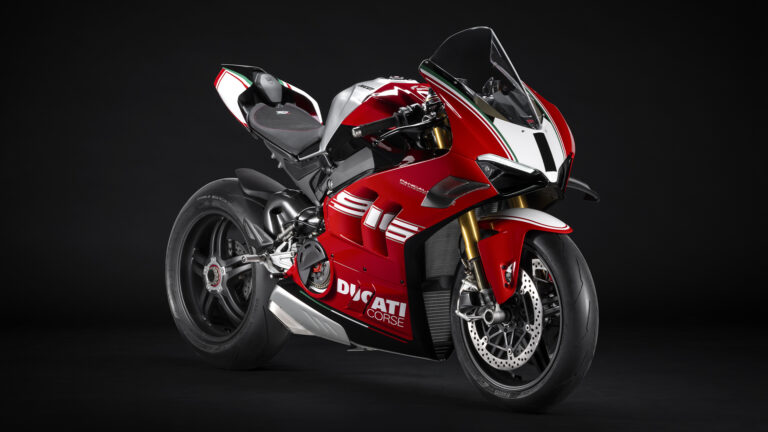
Ducati revisited this heritage with its 2023 announcement of the Panigale V4 SP2 30° Anniversario 916. The limited 500-bike tribute borrowed visual references such as the short tail, sculpted tank and racing graphics. It is a modern V4 celebration, with its own equipment and performance, rather than a reissue of the original twin.
Understanding a surviving Ducati 916
Start with the exact version and its documentation. Ask for identification records, service invoices, ownership history and details of replacement bodywork or exhausts. Photographs can reveal presentation and visible equipment, but they cannot establish mechanical condition or originality on their own.
The Rider retrospective specifically notes the belt-driven camshafts and the importance of regular belt replacement. Use the correct model documentation and a qualified Ducati specialist to establish what work is due on a particular motorcycle. An old service stamp or low mileage alone does not describe its present condition.
More Ducati history
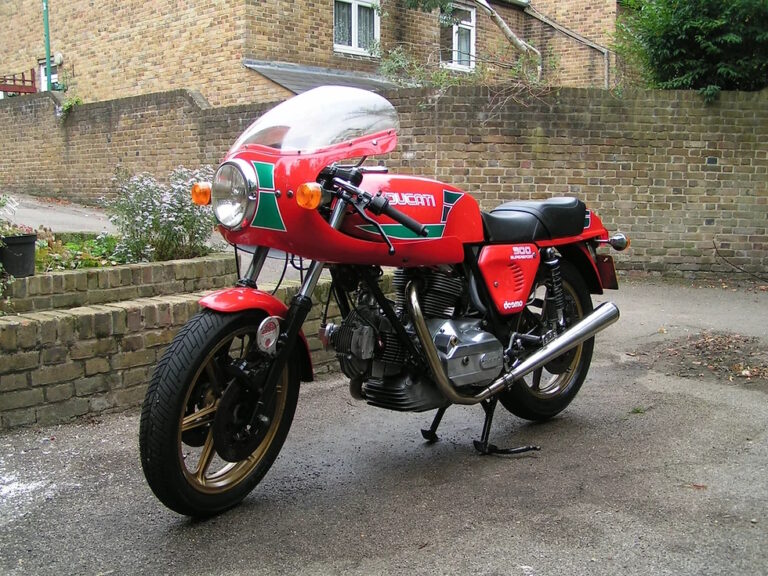
Compare the 916 with our 1982 Ducati 900SS profile to explore an earlier sporting tradition. Then follow its visual legacy in the Panigale V4 SP2 30° Anniversario 916, or browse our Ducati archive.
Ducati 916 photo gallery
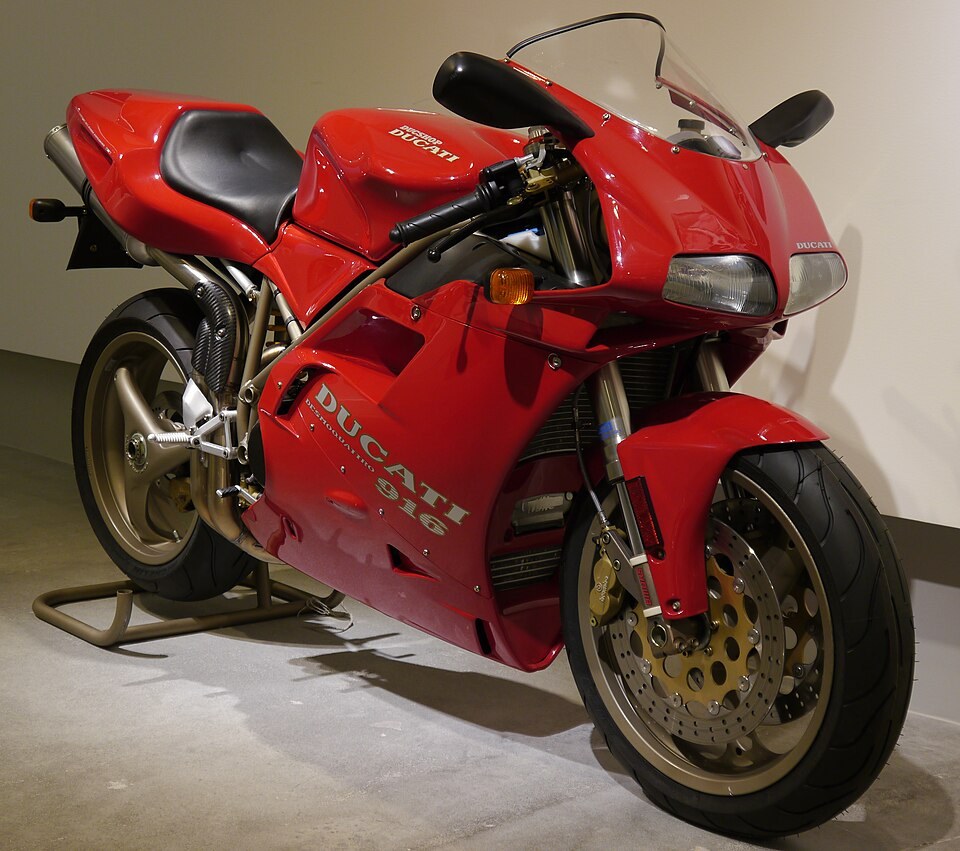
Ten photographs show the original design and later 916-family variants. Select a photograph for the larger image. Images are resized proportionally; each caption links to its source and licence. Featured photograph: Klaus Nahr, CC BY-SA 2.0.
Watch: Ducati 916 videos
These independently produced films add riding and workshop perspectives. Versions shown may differ from the standard 1994 motorcycle.
Ducati 916 1994–1998 review and used buying guide
Watch Ducati 916 1994–1998 review and used buying guide on YouTube.
MCN: Ducati 916 SP strip and rebuild
Watch MCN: Ducati 916 SP strip and rebuild on YouTube.
MCN Bikes of the Era: riding Ducati’s 916
Watch MCN Bikes of the Era: riding Ducati’s 916 on YouTube.
Frequently asked questions
Who designed the Ducati 916?
Massimo Tamburini designed it, combining the bodywork, packaging and chassis into a coherent sporting motorcycle.
Why is a bike unveiled in 1993 called a 1994 Ducati 916?
The October 1993 Milan unveiling preceded the 1994 milestone celebrated in Ducati’s history. Market model-year labels may differ.
Are the SPS and modern anniversary model the same bike?
No. SPS denotes a later performance variant within the original family. The Panigale V4 SP2 anniversary motorcycle is a much later V4 tribute.
Sources and further reading
- Ducati: 916 history and Tamburini’s development
- Ducati: historical specifications
- Cycle World: July 1994 road test
- Rider: 1994–1998 Ducati 916 Strada retrospective
- Ducati: 30th anniversary tribute