
Views: 0
Ducati Superleggera V4: Lightweight Superbike Technology
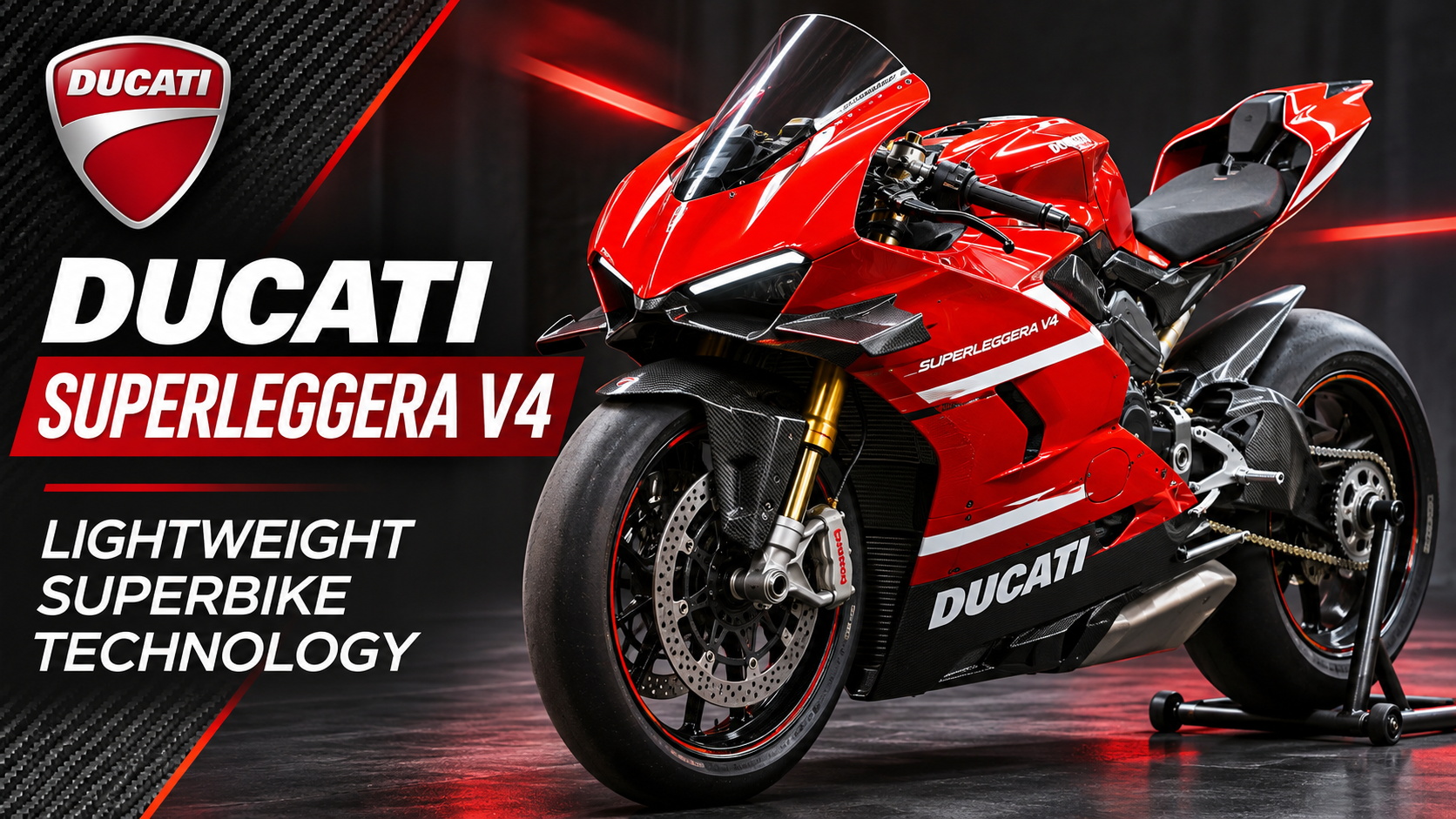
Carbon-fiber engineering, MotoGP-inspired aerodynamics, a high-revving V4 engine and sophisticated electronics make the Ducati Superleggera V4 a remarkable example of modern motorcycle technology.
Introduction: Engineering Without Compromise
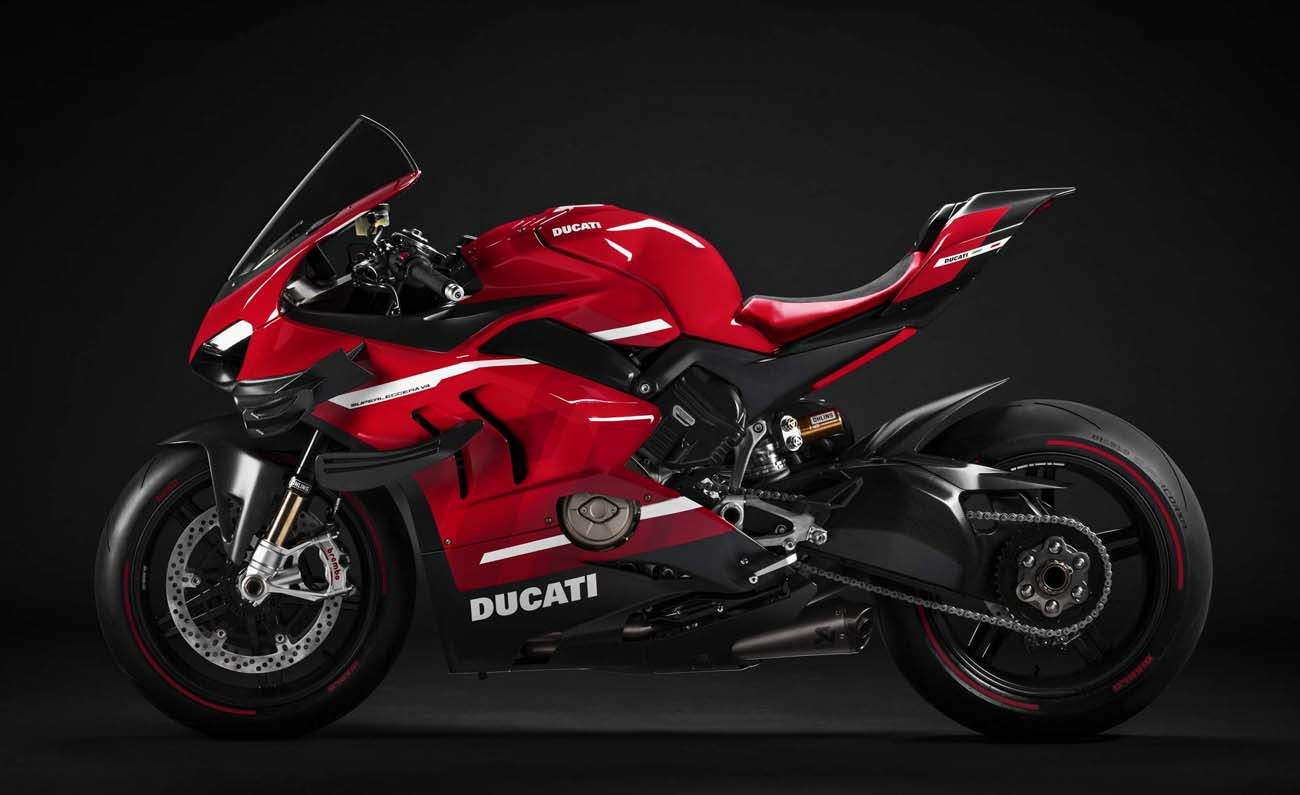
The Ducati Superleggera V4 represents one of the most ambitious superbike projects ever undertaken by the Italian motorcycle manufacturer. Introduced in February 2020, the machine was developed to explore how far weight reduction, power delivery and racing technology could be pushed in a road-homologated motorcycle.
Based on Ducati’s Panigale V4 platform, the Superleggera V4 takes an extraordinary approach to component design. Rather than relying only on lightweight body panels, Ducati used carbon fiber in major structural elements, including the frame, swingarm and wheels.
Only 500 numbered examples were produced, making the motorcycle both an engineering showcase and an exclusive collector’s machine.
- 998 cc Desmosedici Stradale R V4 engine
- 224 hp in road-approved EU configuration
- 234 hp with the track-only racing exhaust
- 159 kg standard dry weight
- 152.2 kg dry weight in racing configuration
- Carbon-fiber frame, swingarm and wheels
- Biplane aerodynamic wings inspired by MotoGP
- Production limited to 500 numbered units
1. Carbon-Fiber Construction: The Foundation of Lightweight Performance
The most significant innovation of the Superleggera V4 is its extensive use of carbon-fiber composite structures.
Carbon fiber offers an excellent strength-to-weight ratio and allows engineers to control stiffness through the selection and orientation of composite layers. This makes it useful for high-performance motorcycle structures where mass, rigidity and handling characteristics must be carefully balanced.
Carbon-Fiber Frame
The Superleggera V4 uses a carbon-fiber front frame designed around the compact V4 engine. Unlike a conventional large perimeter frame, this architecture uses the engine as a stressed structural element.
The carbon structure contributes to lower mass while providing engineered stiffness characteristics for the chassis.
Carbon-Fiber Swingarm
The single-sided rear swingarm is also made from carbon fiber. Reducing weight in the swingarm helps lower the mass of the chassis assembly and can contribute to more responsive suspension behavior.
Producing a structural carbon-fiber swingarm requires carefully controlled material layups, manufacturing processes and quality inspections because it must withstand substantial braking, acceleration and cornering loads.

Carbon-Fiber Wheels
The lightweight five-spoke carbon-fiber wheels are another essential part of the engineering package.
Wheel weight is especially important because wheels are both rotating components and partly unsprung mass.
Reducing rotational inertia helps improve acceleration, braking response and steering agility. Lower unsprung mass can also help the suspension follow changes in the road or track surface.
Titanium, Magnesium and Precision-Machined Components
Ducati also uses titanium, magnesium and machined aluminum components throughout the motorcycle.
These materials are selected according to the specific demands of each part, including strength, heat resistance, corrosion behavior and manufacturing requirements.
2. Desmosedici Stradale R: The 998 cc V4 Engine
At the heart of the Superleggera V4 is a 998 cc, 90-degree Desmosedici Stradale R engine closely related to Ducati’s high-performance Panigale V4 R architecture.
The engine uses desmodromic valve actuation, a counter-rotating crankshaft and a sophisticated electronic management system to deliver exceptionally high performance.
Power and Performance
In its EU road-approved specification, Ducati quotes 224 hp at 15,250 rpm. Installing the titanium Akrapovic track-only exhaust system increases the claimed output to 234 hp at 15,500 rpm.
The racing exhaust is part of the motorcycle’s dedicated racing equipment and is not intended for ordinary road use.
Why a Counter-Rotating Crankshaft Matters
Most motorcycle engines use a crankshaft that spins in the same direction as the wheels. The Superleggera’s counter-rotating crankshaft turns in the opposite direction.
This arrangement can reduce some of the gyroscopic effects associated with the rotating wheels, helping the motorcycle change direction more readily. Its dynamic interactions can also influence pitch behavior during acceleration and braking.
Desmodromic Valve Control
Ducati’s desmodromic system uses mechanical mechanisms to open and close the engine valves rather than relying on conventional valve springs for closing.
This technology is central to Ducati’s racing heritage and supports precise valve operation at extremely high engine speeds.
3. MotoGP-Inspired Biplane Aerodynamics
The Superleggera V4 features highly distinctive carbon-fiber biplane winglets inspired by Ducati’s Desmosedici GP16 MotoGP motorcycle.
These aerodynamic elements generate a downward force as speed increases, helping improve front-end stability and control under demanding riding conditions.

50 kg of Downforce at 270 km/h
According to Ducati, the biplane wing arrangement produces approximately 50 kg-force of aerodynamic downforce at 270 km/h.
This additional vertical load contributes to improved high-speed stability and can help manage front-wheel lift under acceleration.
Downforce is dependent on speed and aerodynamic conditions. The quoted figure is a reference point rather than a constant force.
Why Aerodynamics Matter
Motorcycle aerodynamic systems must balance drag, stability, cooling and rider movement.
The Superleggera V4 demonstrates how developments from professional racing can influence the design of advanced road-homologated motorcycles.
4. Advanced Suspension and Braking Components
Extreme performance requires precise suspension movement and reliable braking.
Ohlins Suspension
The Superleggera V4 features premium Ohlins suspension components, including an NPX25/30 pressurized front fork and a TTX36 rear shock.
The suspension architecture is designed for accurate damping control under substantial braking, acceleration and cornering forces.
Brembo Stylema R Brakes
The braking system uses Brembo Stylema R front calipers with high-performance discs and controls developed for superbike applications.
The goal is to provide strong, controllable braking performance together with consistent feel during demanding track use.
5. Advanced Electronics and Rider Assistance
The Superleggera V4 uses sophisticated electronic systems to help riders manage the performance of its engine and chassis.
- Riding and power modes: Configurable engine response and electronic settings.
- Ducati Traction Control EVO 2: Helps manage rear-wheel traction.
- Ducati Wheelie Control: Helps control front-wheel lift during acceleration.
- Ducati Slide Control: Supports controlled rear-wheel slide behavior.
- Cornering ABS EVO: Provides braking assistance while accounting for motorcycle lean.
- Engine Brake Control EVO: Adjusts engine-braking behavior.
- Ducati Quick Shift EVO 2: Enables clutchless shifting while riding.
- Ducati Power Launch: Assists with controlled standing starts.
These systems work together to make extremely high performance more manageable, although they cannot overcome the physical limits of available tire grip.
6. Road Configuration vs Racing Configuration
One of the Superleggera V4’s most fascinating features is the transformation enabled by its racing kit.
| Specification | Road Configuration | Racing Configuration |
|---|---|---|
| Engine | 998 cc V4 | 998 cc V4 |
| Maximum power | 224 hp | 234 hp |
| Dry weight | 159 kg | 152.2 kg |
| Power-to-weight ratio | 1.41 hp/kg | 1.54 hp/kg |
| Exhaust | Road-approved titanium Akrapovic | Track-only titanium Akrapovic racing system |
| Application | Road homologation | Closed-circuit track use |
Figures are Ducati’s claimed specifications. Dry weight excludes operating fluids and is not the same as ready-to-ride mass.
7. Ducati Superleggera V4: Photo Gallery


8. Track Performance and Engineering Results
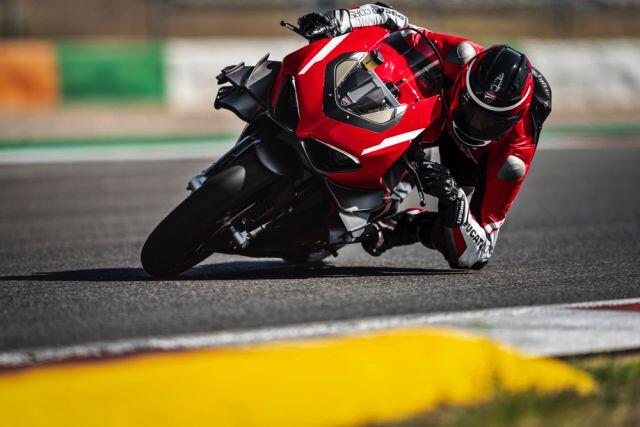
Ducati developed the Superleggera V4 with the goal of approaching the performance of dedicated racing motorcycles while retaining a road-homologated base configuration.
During development testing at Mugello, Ducati test rider Alessandro Valia recorded a lap of approximately 1 minute 52.45 seconds on a Superleggera V4 equipped with the racing kit and slick tires.
This demonstrated the performance potential of the lightweight chassis, high-output engine, advanced electronics and aerodynamic package working together.
9. Limited Production and Exclusivity
The original Superleggera V4 was limited to 500 numbered examples, with production beginning in 2020 at Ducati’s Borgo Panigale factory.
Each machine represents an unusually intensive manufacturing project because of its specialized carbon-fiber structures, premium components and extensive engineering requirements.
The motorcycles were supplied with a dedicated racing kit, allowing their owners to experience a more focused track configuration.
10. Watch the Ducati Superleggera V4
Official Ducati: Superleggera V4 — Dreams Matter
Official Ducati: Superleggera V4 Design
11. Why the Superleggera V4 Matters
The Ducati Superleggera V4 is important not simply because of its power output or rarity, but because it integrates multiple advanced technologies into a single motorcycle.
Carbon-fiber structural engineering reduces mass, the high-revving V4 engine produces exceptional power, the aerodynamic winglets improve high-speed behavior, and electronic rider aids help manage the resulting performance.
It demonstrates how material science, engine design, aerodynamics and electronic systems can work together to extend the capabilities of a modern superbike.
Conclusion
The Ducati Superleggera V4 stands as a landmark achievement in lightweight motorcycle engineering. With its carbon-fiber frame, swingarm and wheels, 998 cc V4 engine, MotoGP-inspired winglets and sophisticated electronics, it brings technologies associated with elite racing into an exceptionally exclusive road-homologated machine.
For motorcycle enthusiasts and engineering followers, the Superleggera V4 offers a remarkable example of what becomes possible when performance, materials and innovation are placed at the center of a motorcycle’s design.